
Klavetek Green Blocks & Tiles

Lightweight Blocks

Lightweight AAC blocks that cut structural load, speed up construction and keep buildings comfortable — manufactured by KLAVETEK in Malda, West Bengal.

What Are Lightweight Blocks?

Lightweight Blocks, Explained

Lightweight blocks are precast wall units with a much lower density than traditional clay bricks — and AAC is the most widely used example.

AAC blocks get their light weight from millions of microscopic air pockets created during manufacturing. With a density of roughly 550–650 kg/m³, they weigh about one-third of a typical clay brick wall — yet they still deliver the compressive strength needed for modern wall construction.

That combination — light enough to handle easily, strong enough to build with — is exactly why builders use lightweight blocks for everything from apartment partitions to industrial external walls.
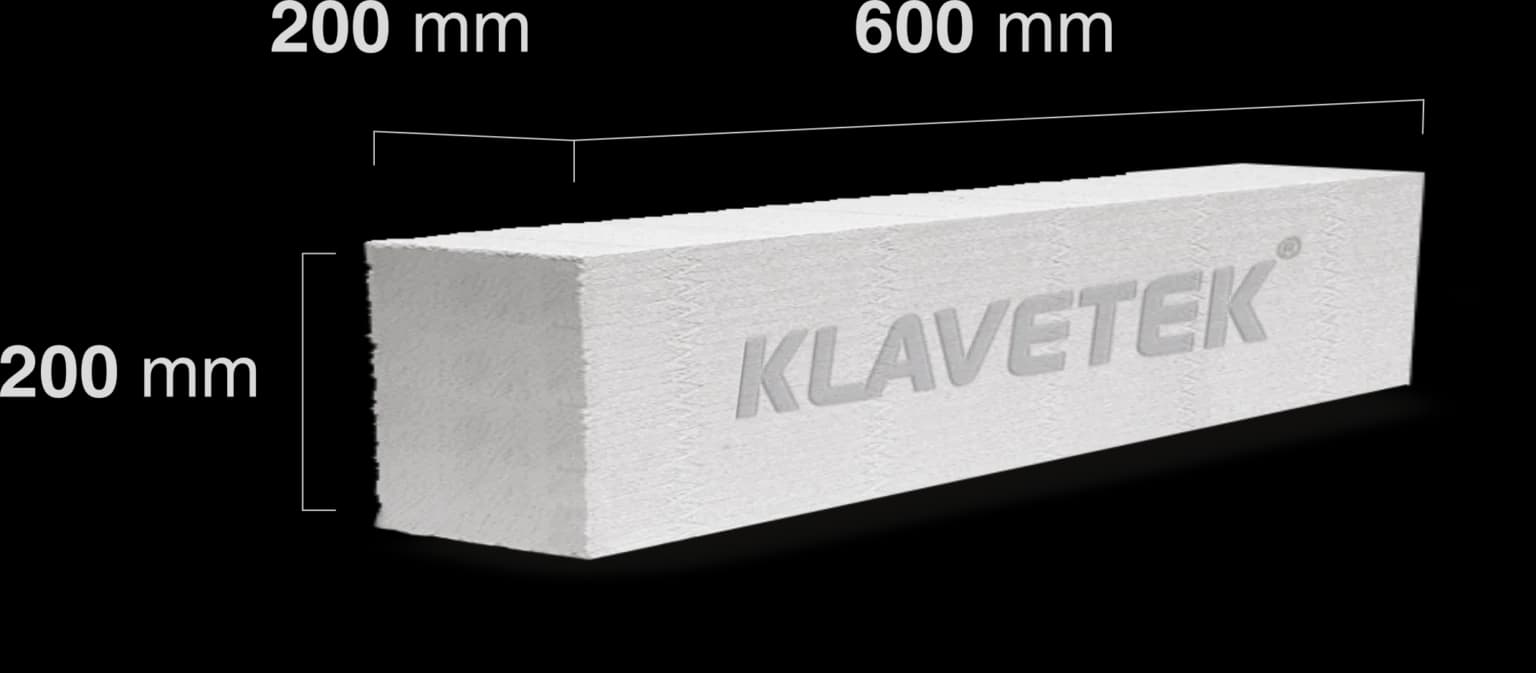
Klavetek lightweight 200mm AAC block
Structural Benefits

How Lightweight Blocks Help the Structure

A lighter wall does real work for the building — here is where it matters most.

  • Reduced Dead Load

    Lighter walls lower the load on beams, columns and foundations, which can reduce steel and concrete requirements.

  • Easier Handling

    One block is far lighter than the equivalent wall area of bricks, so crews lift and place it with less effort.

  • Faster Construction

    Large-format blocks cover more wall area per unit and lay quickly with thin mortar beds.

  • Less Site Equipment

    Lightweight material means less reliance on heavy lifting equipment for block placement.

Performance

Performance Benefits of Lightweight AAC Blocks

The same air-pocket structure that makes AAC light also makes it comfortable to live and work in.

Thermal Insulation

Aerated structure delivers strong thermal insulation (low thermal conductivity), keeping interiors cooler and lowering air-conditioning loads.

Fire Resistance

AAC is made from incombustible mineral materials, giving walls multi-hour fire resistance.

Sound Insulation

The dense, airy matrix absorbs and blocks sound, making lightweight AAC walls effective noise barriers.

Full measured values — thermal conductivity, fire rating, sound reduction and more — are listed in the technical specifications.

Lightweight vs. Clay Bricks

Lightweight Blocks vs Traditional Clay Bricks

A quick, honest look at where lightweight AAC blocks win — and where bricks still have their place.

FactorLightweight AAC BlocksTraditional Clay Bricks
WeightA single block weighs roughly 8.5–20.5 kg depending on thickness (about one-third of the weight of an equivalent brick wall).Bricks are nearly twice the weight of AAC per wall area, making them heavier to transport and handle.
Wall CoverageLarge-format blocks (600 × 200mm) cover more area per unit with fewer joints.Many small units are needed per square metre, with more mortar joints.
InsulationBuilt-in thermal and acoustic insulation from the aerated structure.Insulation depends on wall thickness and added treatments.
FinishPrecision dimensions mean thinner plaster and less finishing work.More mortar and plaster are typically needed for a smooth finish.
SustainabilityUses fly ash (a power-plant by-product), saving top soil and reducing waste.Clay brick production consumes top soil and significant fuel.

Clay bricks can still suit certain small-scale or traditional construction styles — the right choice depends on your project. For most residential and commercial work, lightweight AAC blocks deliver better overall wall economics.

Sizes

Lightweight Block Sizes Available

KLAVETEK manufactures lightweight AAC blocks in five thicknesses — choose the right one for your wall.

Lightweight Blocks — FAQs

Common questions about building with lightweight AAC blocks.

Are lightweight AAC blocks strong enough for construction?

Yes, for the wall applications they are designed for. KLAVETEK AAC blocks deliver compressive strength in the range of about 4–5 N/mm², suited to load-bearing and non-load-bearing walls across residential, commercial and institutional buildings. Always confirm structural design with a qualified engineer.

How much lighter is an AAC block than a clay brick?

AAC blocks weigh roughly one-third of an equivalent clay brick wall, with a density of about 550–650 kg/m³ compared to traditional brickswhich are significantly denser.

Can lightweight blocks be used for external walls?

Yes. Thicker AAC blocks (such as 150mm, 200mm and 250mm) are commonly used for external walls, with the thickness choice based on structural, insulation and fire-resistance requirements.

Do lightweight AAC blocks reduce cooling costs?

The aerated structure gives AAC excellent thermal insulation, helping interiors stay cooler and reducing the load on air-conditioning in warm climates like Malda.

Are lightweight blocks easier to cut on site?

Yes. AAC blocks can be accurately cut, chased and shaped with ordinary hand tools, which simplifies plumbing and electrical chases during construction.

Where can I buy lightweight blocks in Malda?

KLAVETEK manufactures lightweight AAC blocks in Malda, West Bengal. Contact our team at +91 78118 24341 or via the contact page for availability, pricing and delivery.

Build Lighter with KLAVETEK

Get lightweight AAC block pricing and availability for your project.

Get a Quote