Blog & Insights
Expert insights on AAC blocks, sustainable construction, cost analysis, and building material technology from Klavetek's engineering team.
AAC Blocks: The Smart Choice for Modern, Sustainable Construction
Autoclaved aerated concrete (AAC) is transforming how buildings go up — lighter, more precise, better insulated and far gentler on the environment. Discover how Klavetek's autoclaved AAC blocks combine engineered precision with genuine sustainability, from the fly-ash based manufacturing process to faster, more economical walls on site.
Read Full ArticleLatest Insights
Practical articles and updates from Klavetek's engineering team — covering AAC block technology, sustainable construction and smarter building.
Welcome to Klavetek — Eco-Friendly AAC Blocks & Tiles
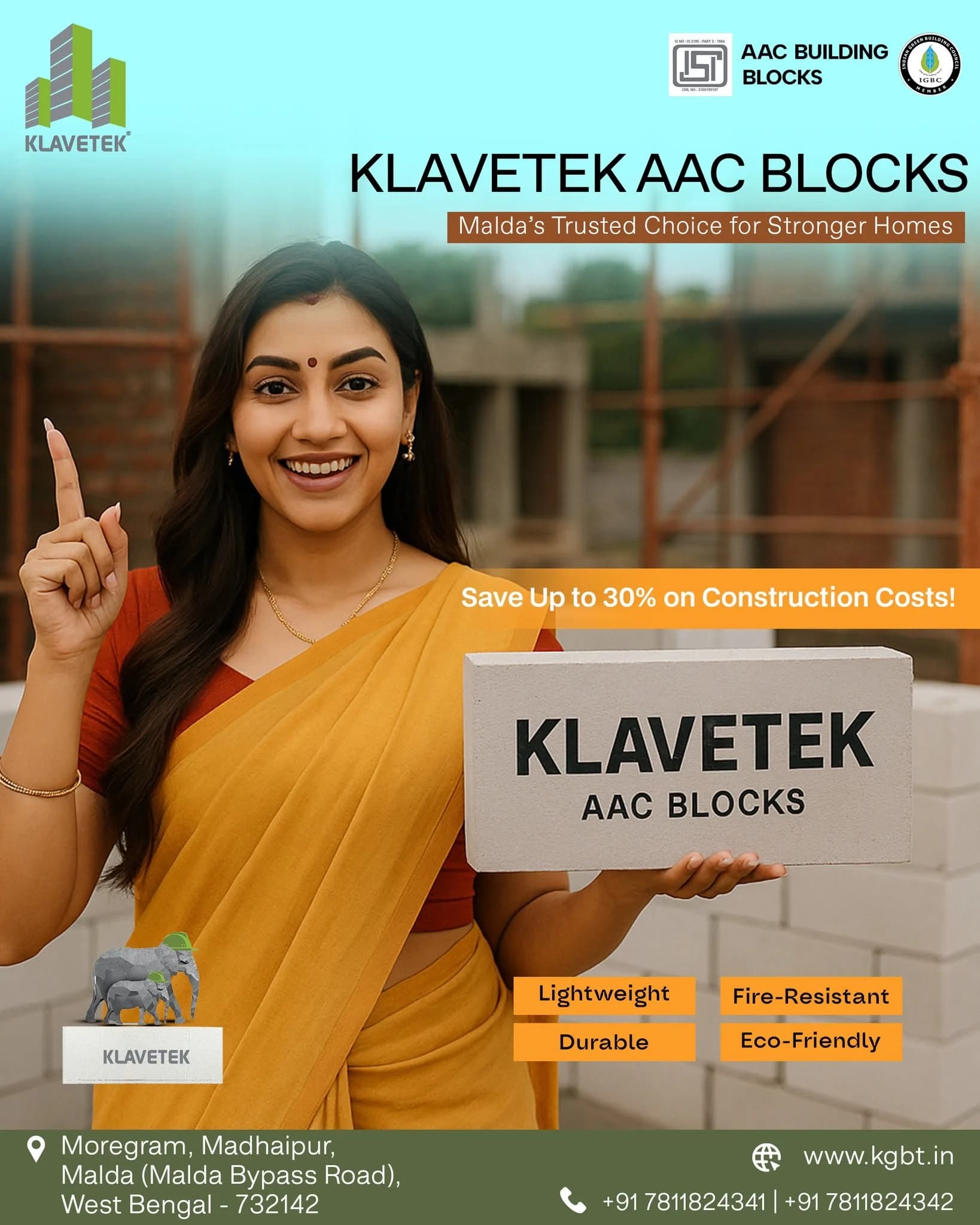
Klavetek manufactures premium autoclaved aerated concrete (AAC) blocks and tiles in Old Malda, focused on strong, lightweight and environmentally friendly building materials.
Read More
Inside Klavetek — Engineering Excellence at Every Stage
Step inside our Old Malda facility to see how fly ash, cement, lime and gypsum are precisely batched, moulded and autoclaved into strong, lightweight, dimensionally exact AAC blocks.
Read More
Building Green — Less Energy, Less Waste with AAC
AAC production safely recycles industrial fly ash and needs far less raw material on site, helping construction teams cut waste and build in a more sustainable way.
Read More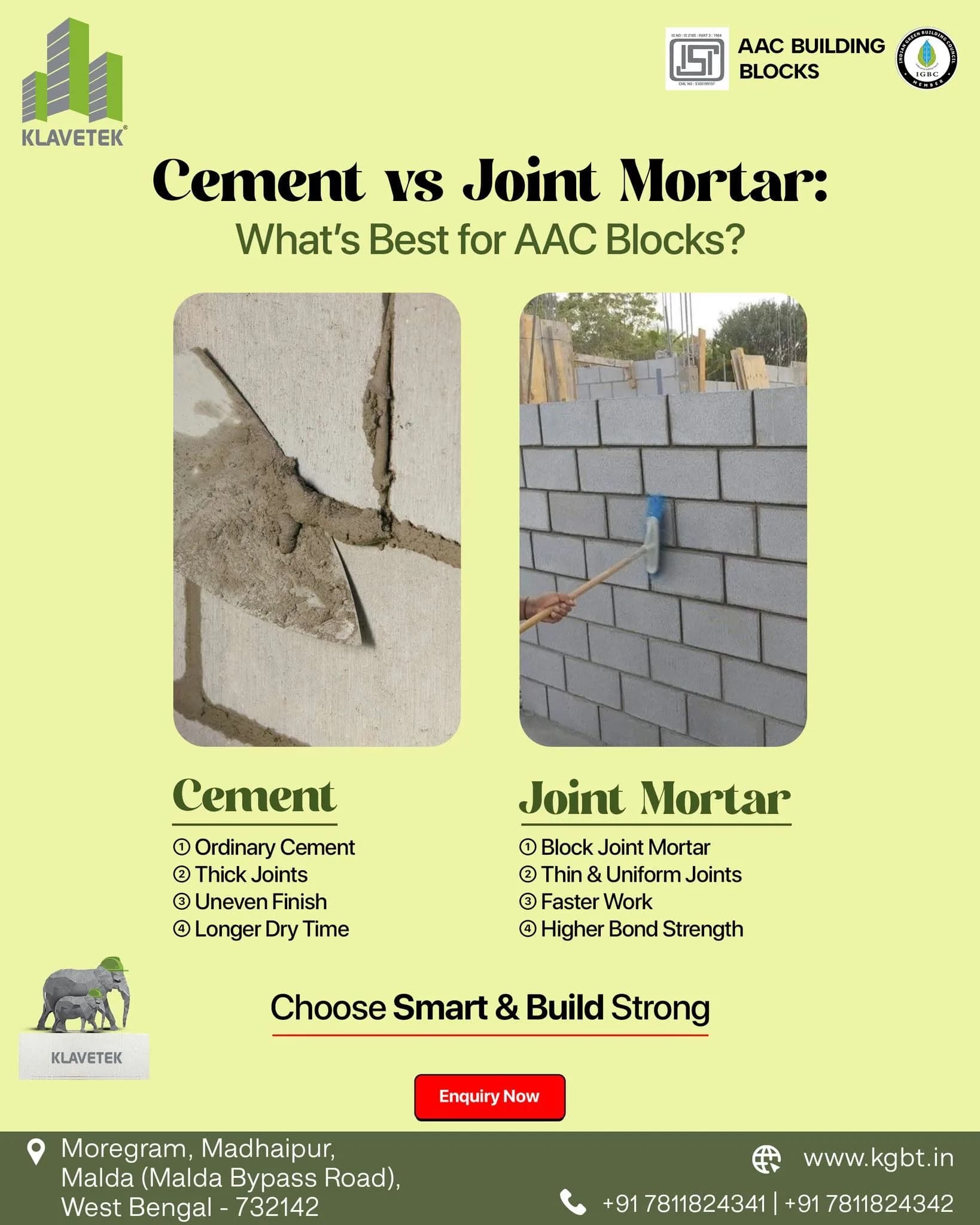
Why AAC Blocks Speed Up Every Construction Project
Large-format, lightweight AAC blocks are easy to handle and lay quickly with thin mortar beds — shortening project timelines and reducing labour demand on site.
Read More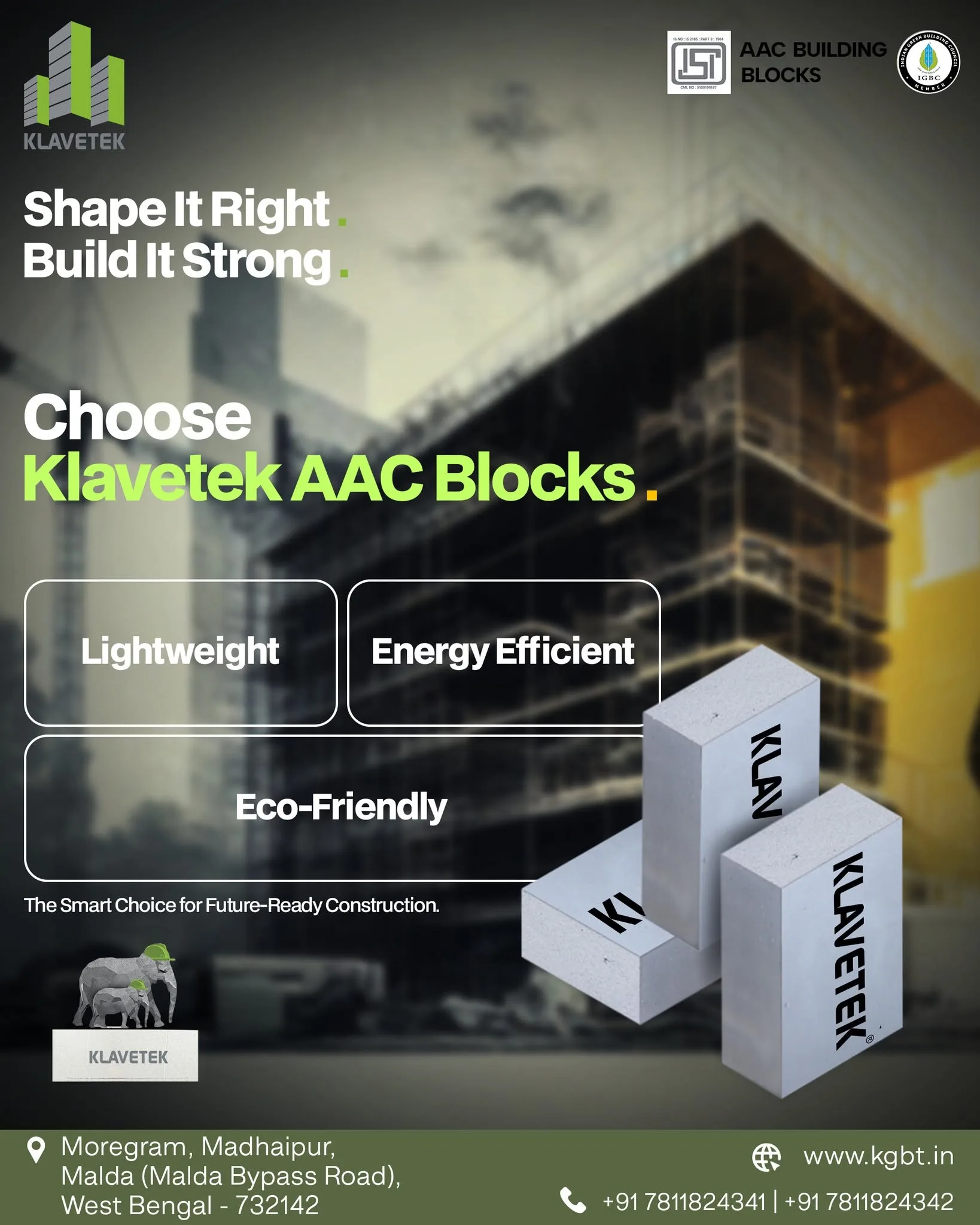
The Science Behind Autoclaved Aerated Concrete
Learn how air pockets formed during autoclaving give AAC its signature light weight and thermal performance — without sacrificing the compressive strength your walls need.
Read MoreKlavetek AAC Blocks — Cost-Effective, Precision-Made Walls
Engineered to precise dimensions, Klavetek AAC blocks reduce mortar usage and finishing work, delivering clean, strong and economical walls for homes and buildings.
Read MoreThermal Insulation & Energy Efficiency Floor to Ceiling
The porous structure of AAC materials provides natural thermal insulation, keeping interiors cooler in summer and cutting long-term air-conditioning energy costs.
Read MoreAAC Blocks vs Traditional Bricks: An Honest Comparison
Weight, strength, insulation, cost and construction speed — a balanced look at how AAC blocks and clay bricks really compare, so you can pick the right wall material for your project.
Read MoreHow to Choose the Right AAC Blocks for Your Construction
Block sizes, density, strength, dimensional accuracy and supplier reliability — the practical checks that matter when selecting AAC blocks for a residential or commercial build.
Read MoreAAC Block Advantages for Residential Construction
Why homes built with AAC blocks are cooler, quieter and faster to finish — and how lighter walls reduce structural load and long-term running costs for homeowners.
Read MoreWhere AAC Blocks Are Used: Applications Across Building Types
From homes and hospitals to schools, commercial complexes and industrial sheds — a practical overview of how AAC blocks are applied across building types.
Read More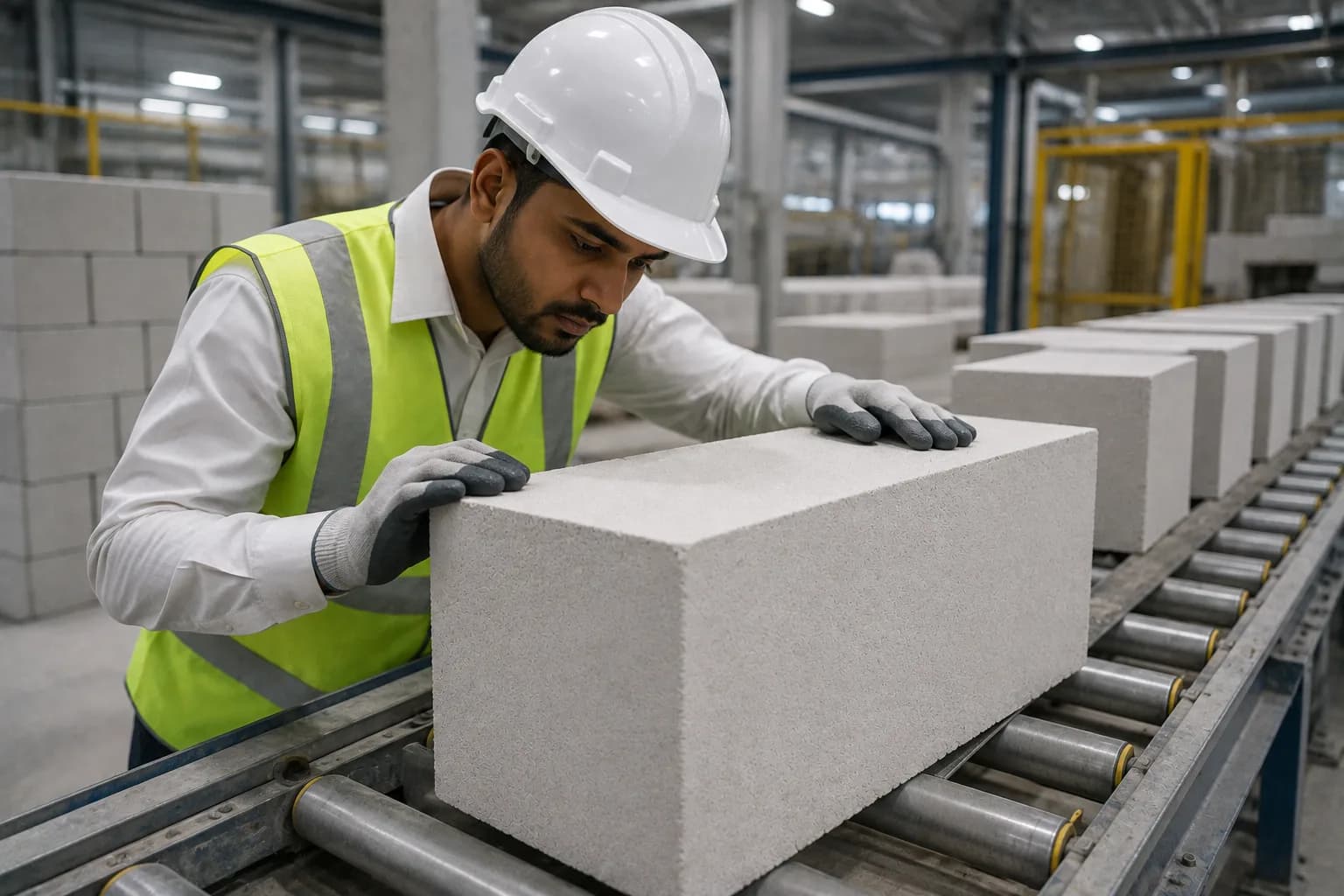
AAC Block Quality Testing: What to Look For
Density, compressive strength, dimensional accuracy, water absorption and shrinkage — the quality checks that separate dependable AAC blocks from inconsistent ones.
Read More